Everyone wants to buy low. The problem is that nobody can reliably tell, in the moment, whether prices are about to go lower or higher. Dollar-cost averaging is the strategy that stops you from having to guess.
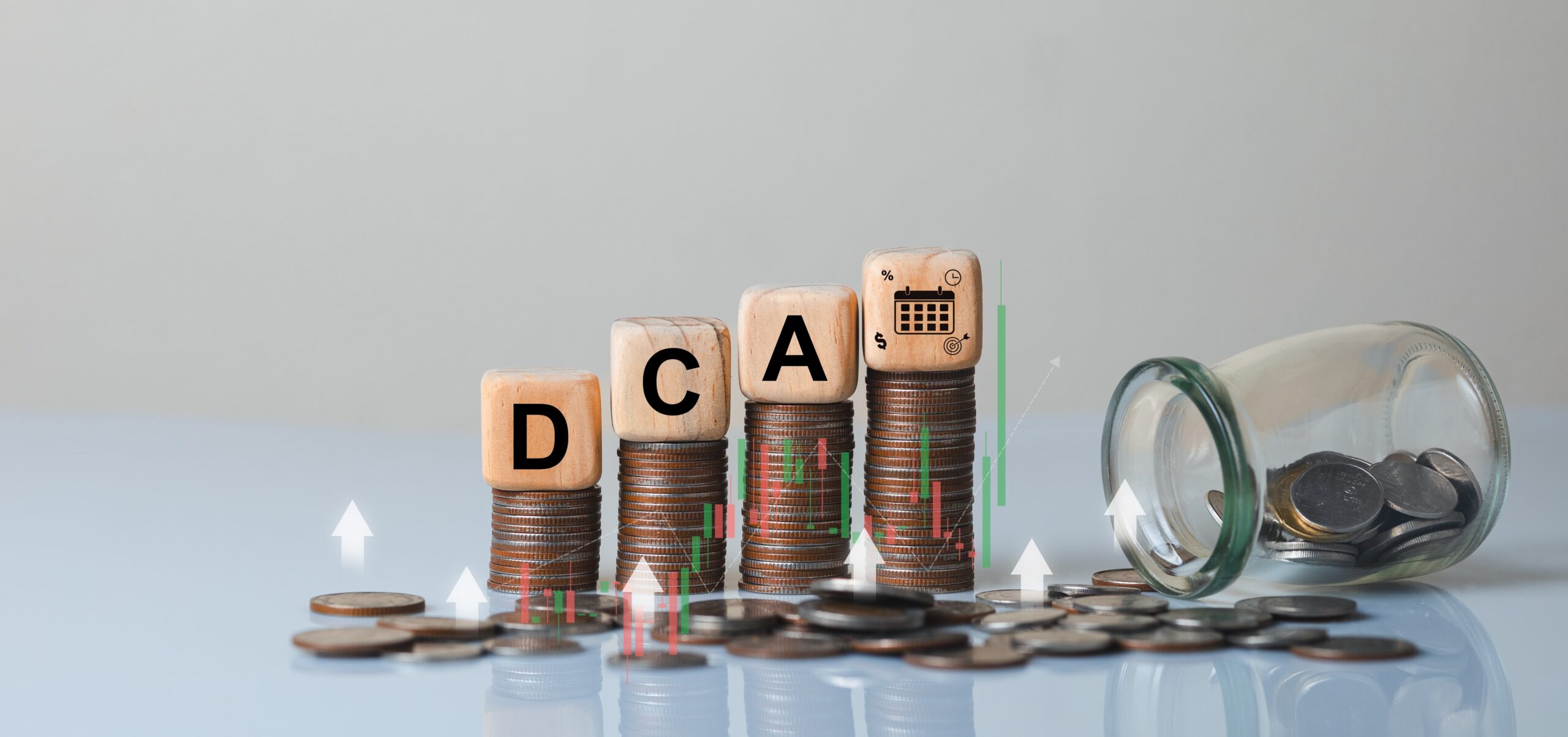
Dollar-cost averaging (DCA) simply means investing a fixed amount on a regular schedule — say, the same sum every month — regardless of what the market is doing that week.
How it works in practice
When prices are high, your fixed amount buys fewer shares. When prices are low, the same amount buys more. Over time, this naturally means you buy more when things are cheap and less when they’re expensive — the opposite of what fear and excitement usually push people to do.
The real benefit is behavioral
DCA’s biggest advantage isn’t mathematical — it’s psychological. It removes the paralysis of “is now a good time?” and keeps you consistently invested through both scary and euphoric markets.
Why timing the market rarely works
To time the market successfully, you’d have to be right twice: when to get out and when to get back in. Miss just a handful of the market’s best days — which tend to arrive unpredictably, often near the worst ones — and long-term returns can suffer badly. DCA sidesteps that trap by keeping you in the game.
Automating your investing turns a hard emotional decision into a boring calendar event. That’s the point.
Setting it up
- Pick an amount you can sustain through good months and bad.
- Choose a schedule — monthly is common — and automate the contribution.
- Leave it alone. Resist the urge to pause when headlines get loud; those are often the moments DCA helps most.
Dollar-cost averaging won’t make you the smartest investor at the dinner table. It will make you a consistent one — and consistency, over decades, usually wins.
This article is for general educational purposes only and is not financial advice. Everyone’s situation is different — consider speaking with a qualified financial professional before making decisions about your money.